
You have your offer letter and your blocked account. You have sent your file. Then you wait. The next message you get is the one students talk about most. It is called the doc mail. This guide explains what the doc mail is, how the VFS appointment works, and what the visa interview is really like.
What is a doc mail?
A doc mail is an email that tells you it is your turn to submit your documents. Under the old system, students registered for an appointment and then waited. The embassy said the old waiting list was already more than 27 months. Doc mails came in batches, and each batch covered a set of registration dates. A group summary for October 2026 showed this pattern. Bachelor's doc mails went out on 21 and 23 October 2026, for registrations from April and May 2024. Master's doc mails went out on 30 October 2026, for registrations from July to August 2024. The interview slots that followed were in November and December 2026. These dates are an example only. Batches change. Do not plan your intake on one old batch. A doc mail is not a visa. It is not an approval. It is your turn to hand in your file. If you miss your doc mail, ask in the group if others in your batch got one. A missed mail does not always mean you are out. Check your inbox and your spam folder every day after your batch starts.
The new system: CSP from 1 January 2027
From 1 January 2027, the old waiting list ends. Every Bachelor's and Master's student in Dhaka must apply through the Consular Services Portal, at digital.diplo.de. This includes students who already registered on the old list. You need a valid admission letter first. You cannot register without one. The steps are simple. First, create your CSP account. Log in at least once every 60 days, or your account may be deleted. Second, fill in the online form and upload all your documents as clear PDFs. Third, wait for the preliminary review. VFS, the embassy's service provider, checks your documents first. Fourth, book your appointment. Fifth, attend the in-person visit for fingerprints, a photo, the fee, and a quick document check. For blocked account rules and the full CSP steps, read our first guide: German Student Visa and Blocked Account: A Simple Guide for Bangladeshi Students at https://studyingermanyhub.com/blog/german-student-visa-blocked-account-bangladesh. This post does not repeat that guide. It covers only what happens after you apply.
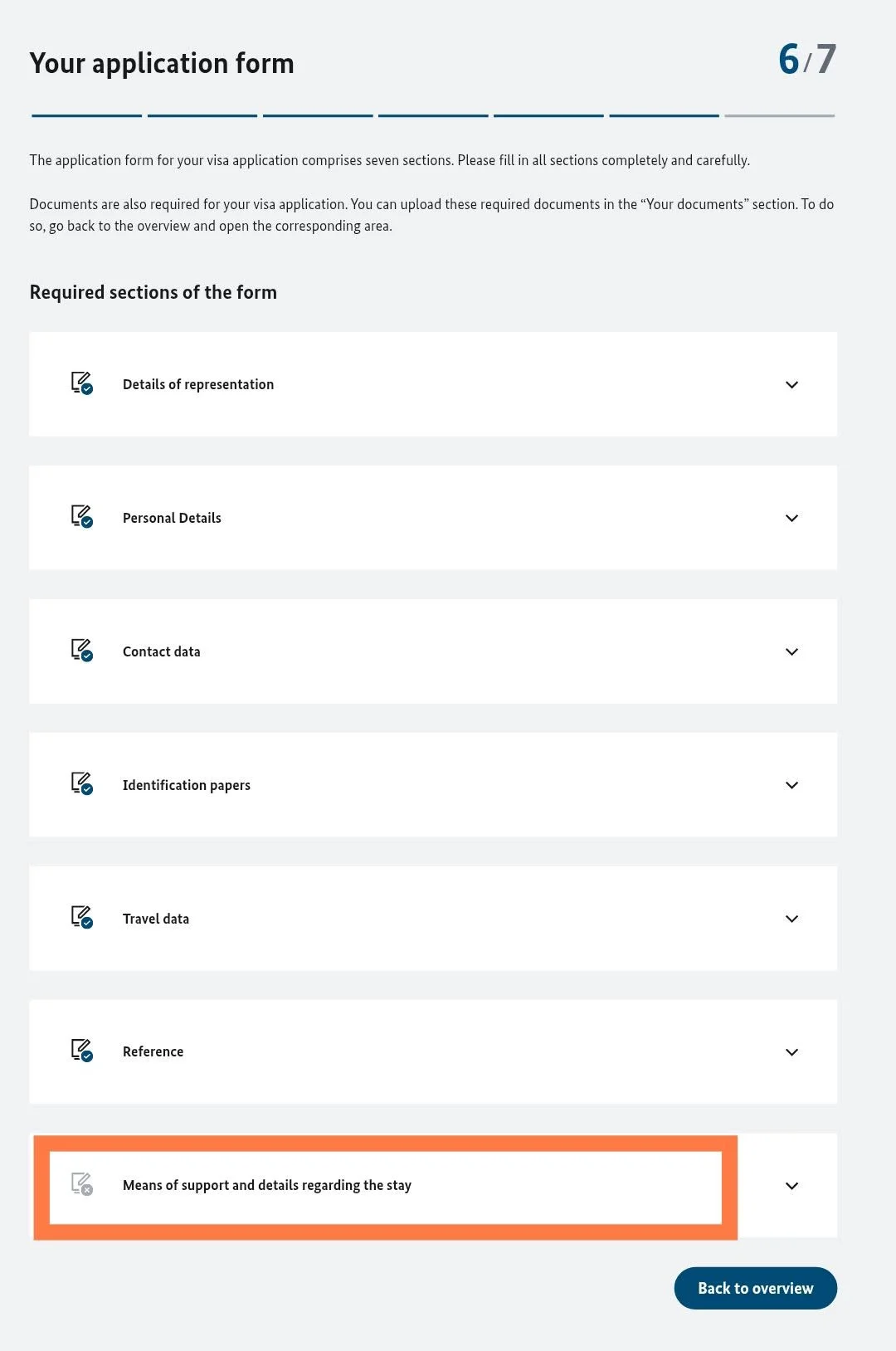
The VIDEX form has seven sections. Means of support is the one students ask about most.
Reference shared by students in the group.
How the preliminary review works
Students in the groups say the preliminary review often takes 3 to 7 days. That time comes from group posts, not from the embassy page. Treat it as a guide, not a promise. If VFS needs more from you, it will ask by email. You then upload the missing file in the portal and resubmit. A common note from VAC Dhaka in November 2026 was to submit only the offer letter, and only the German version. Check the live instruction on your own file. Rules can change from one batch to the next.
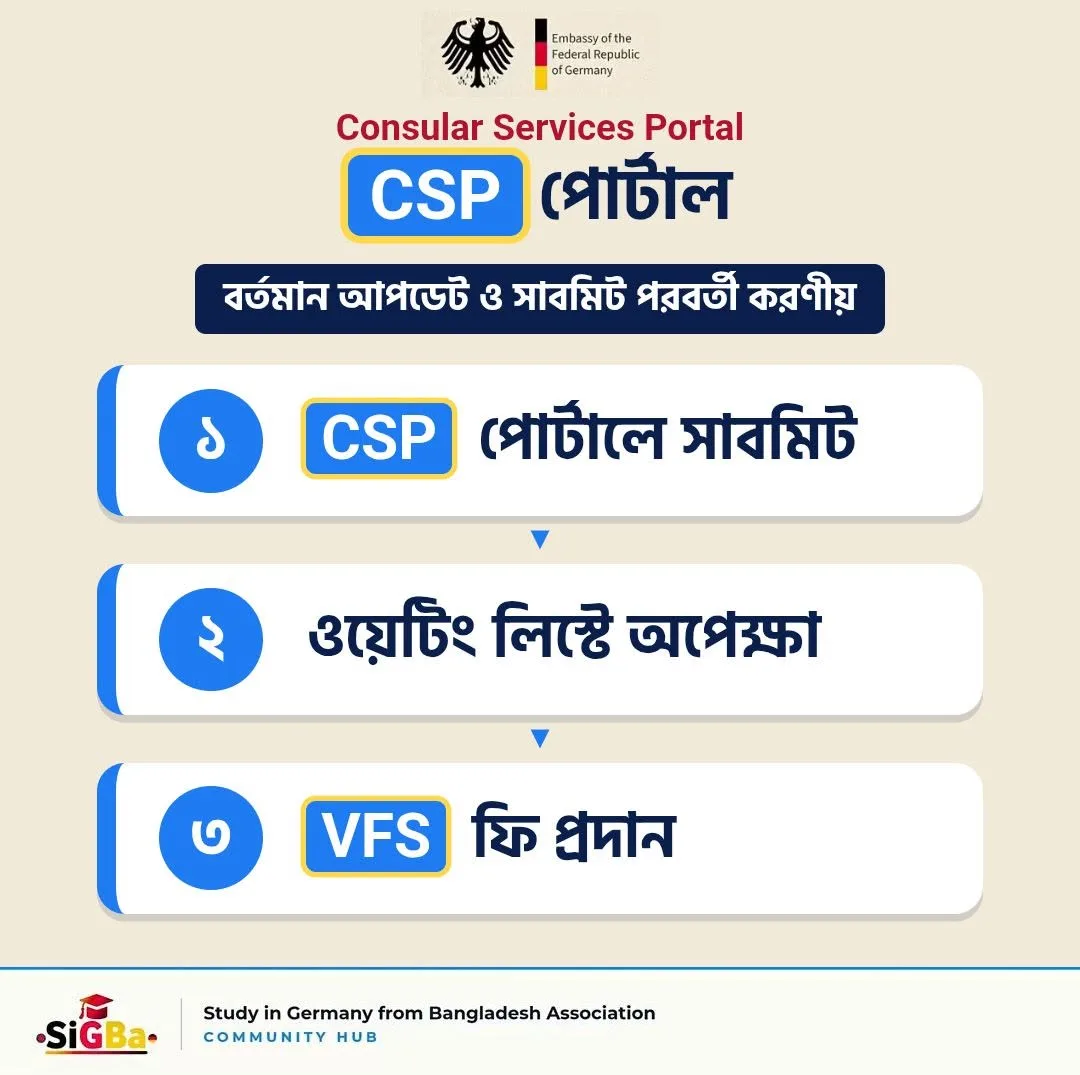
After you submit on the CSP portal: wait for the preliminary review, then pay the VFS fee.
Reference shared by students in the group.
How to book your VFS appointment
After the preliminary review, you get a link to book your appointment. Use only that link. Do not pay anyone for a slot. The embassy forms are free. VFS is the front desk. VFS clerks check your paper order, take your fingerprints and photo, hold your passport, and collect the fee. They do not decide your visa. They seal your folder and send it to the embassy. No VFS clerk has visa power, and no agent has inside pull at VFS. For more on what VFS does and does not do, read VFS Global Germany Student Visa: CSP Portal, Biometrics and Blocked Funds at https://studyingermanyhub.com/blog/vfs-global-germany-student-visa-guide. Prepare your file in the embassy order. Bring the originals and clear A4 copies. Bring one biometric photo, not older than six months. Bring your passport, with at least two empty pages. Bring your admission letter, your blocked account confirmation, your insurance, your certificates and transcripts, your IELTS or TOEFL result, your CV, and your motivation letter. Bring your birth certificate. The birth certificate is new in the CSP portal. Check the live embassy checklist on the day you go.
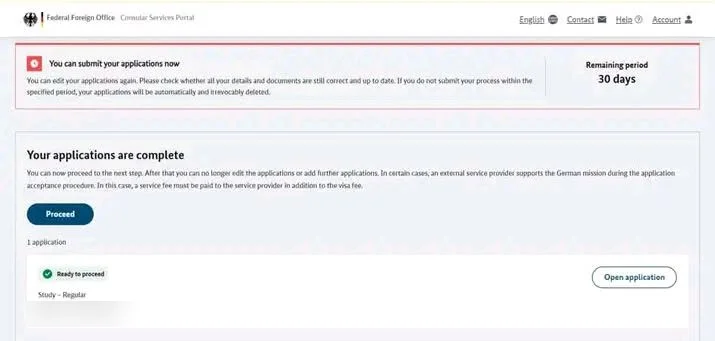
A CSP screenshot shared by students: the portal shows ready to proceed once the first check is done.
Reference shared by students in the group.
What happens on the day
Arrive early. The embassy says that if you are more than 15 minutes late, you must book a new appointment. Plan for Dhaka traffic. At the counter, the clerk checks your documents in order. You give your fingerprints and your photo. You pay the visa fee. The fee is EUR 75 for a national visa. You pay it in taka, in cash. It is not refunded if the visa is refused. The taka amount changes with the exchange rate, so check the rate on the day. Do not pay the fee to an agent. Keep your receipt and your passport collection slip. You will need the slip to collect your passport later.
Who gets an interview, and who does not?
Not every student gets a long interview. Most Master's students get a short check, a phone call, or no interview at all. Bachelor's students are more likely to face questions in person. That pattern comes from group reports, not from an official rule. The embassy may call any student for a follow-up interview. Keep your phone and email reachable after you submit.
The questions students face most
The questions are simple. They test whether your plan is real. Why Germany, and not another country? Why this university and this course? Why did you change your subject, if you did? What did you study before, and what will you study now? How are the two subjects linked? What will you do after your degree? How will you pay for your studies? One Bachelor's interview report from 22 October 2026 shows the pattern well. The officer asked about the student's university in Bangladesh and the subject there. Then the officer asked about the German university and the new subject. Then came the key question: why change from tourism and hospitality to international business? The student said tourism is one part of business, and the new course covers business as a whole. The officer then asked why Germany, what the future plan was, and took the fee and fingerprints. The visit ended with a passport collection slip. Answer in your own words. Do not memorise a script from an agency. Officers can tell when an answer is copied. If you changed subject, say why in one or two plain sentences. Link your old study to your new study. Name one or two subjects that match.
IELTS: low scores, expired scores, and MOI
A low IELTS score is one of the most asked about topics in the groups. An overall 5.5 is low for most public universities. Some private universities may accept it. Some courses may not. Do not apply to a public course that asks for 6.0 or 6.5 with a 5.5 and hope for the best. Check the course page first. If the course asks for 6.0, take a retake. A one-skill retake can help if only one part is low. The embassy does not set your IELTS score. The university does. But a weak score can still hurt your visa case if the officer doubts you can follow the course. What if your IELTS has expired by the interview date? The embassy FAQ gives a clear answer. If you already enrolled at the German university using your current IELTS certificate, you do not need to submit any new IELTS certificate at the time of your visa interview. Bring your current IELTS certificate for your interview. If you have not enrolled yet, check with the university first.
How long after the appointment?
The embassy says the minimum time to process a visa is about 4 weeks. Other guides say 4 to 8 weeks in the busy July to September season. Plan for the longer wait. Do not buy a locked flight before your passport is back in your hand. If classes start while your passport is still out, email your German university at once and ask for a written late arrival note.
Checklist for the appointment day
Before you go, check: admission letter saved as a clear PDF and printed; blocked account opened, money in, confirmation received; health and travel insurance ready, with the right start date; passport, photo, certificates, and transcripts ready; CV and motivation letter ready, in the same words as your interview answers; birth certificate ready; CSP account created, form filled, documents uploaded; visa fee of EUR 75 ready in taka, in cash; source of funds proof filed; name spelled the same on every document. The mistakes that cost students most: trusting an old doc mail batch to predict their own date; booking a VFS slot with no offer letter; giving wrong details when booking; missing the appointment without cancelling it first; arriving more than 15 minutes late; losing the transfer receipt; memorising an agency script for the interview; paying an agent for a free form or a free slot. The doc mail, the appointment, and the interview are three separate steps. Get each one right, in order. The embassy checklist, the CSP portal, and the VFS page are free. Read them first. For the money side of the file, read our first guide: German Student Visa and Blocked Account: A Simple Guide for Bangladeshi Students at https://studyingermanyhub.com/blog/german-student-visa-blocked-account-bangladesh. For what VFS does at the counter, read VFS Global Germany Student Visa: CSP Portal, Biometrics and Blocked Funds at https://studyingermanyhub.com/blog/vfs-global-germany-student-visa-guide. For your grades and credits, use the German GPA Calculator at https://studyingermanyhub.com/ects#gpa-calculator. Check the official pages before you act: German Embassy Dhaka at dhaka.diplo.de, the Consular Services Portal at digital.diplo.de, and the VFS Germany page for Dhaka.
How long does the first check take?
No official page says. The embassy page describes the steps but gives no number of days. Students in the groups say the first check often takes 3 to 7 days. Treat that as group talk, not as a promise. If the check finds a gap, VFS or the embassy will ask by email, and you fix it in the portal and send it again. Only after the check passes do you get the link to book your VFS slot.
The fee at the counter has two parts
The visa fee is 75 euro, paid in taka in cash. The VFS service fee is separate. The embassy states it as 19.13 euro per application. In taka that is now BDT 2,686, with VAT included. The taka amount moves with the exchange rate, so check it again just before your appointment. Premium lounge and courier return cost extra, and both are optional.
Two small rules cost students their slot
First, be on time. The embassy says that if you are more than 15 minutes late, you must book a new appointment. Plan for Dhaka traffic. Second, bring the fee in cash and keep the receipt and the passport collection slip. You need the slip to collect your passport later. After you submit, the embassy says the minimum processing time is about 4 weeks. Other guides say 4 to 8 weeks in the busy July to September season. Plan for the longer wait, and do not buy a locked flight before your passport is back.