
A German student visa needs one thing above all else. You must show that you can pay for your first year. Most students from Bangladesh do this with a blocked account. It is called a Sperrkonto in German. This guide explains how much you need, how the account works, and what to do when plans change. It answers the questions students ask most in the big study-in-Germany groups. It is free to read. No agency is needed for this part.
How much money do you need?
For a student visa, you need €11,904 for 12 months. That is €992 per month. This is the official amount for 2026. It comes from the German student support rate, the BAföG rate. Do not use the old figures. Some old posts still say €934 per month, or €11,208 per year. That rate ended in autumn 2024. The embassy will not accept it now. There is talk of a rise to about €1,075 per month from summer 2027. That is only a draft bill. It is not law yet. Check the embassy checklist again before you pay. The €992 is a legal minimum. It is not a full budget for every city. Munich costs more than Leipzig.
What is a blocked account?
You open the account before you go to Germany. You put the full amount in. The money is then blocked. After you arrive and register your address, the account pays you back. You get €992 each month. You cannot take out more than that in one month. That is the whole point. The embassy wants to see that your money will last the year. If you put in more than €11,904, the extra is not blocked. It can come back with your first monthly payout. You need the blocking confirmation for your visa file. A transfer receipt alone is not enough.
What are the other options?
A blocked account is the most common route. It is not the only one. The embassy also accepts a scholarship confirmation that covers at least €992 per month. It also accepts a formal sponsorship letter from a person who lives in Germany. This is called a Verpflichtungserklärung, under Article 68 of the German Residence Act. If someone offers to sponsor you this way, ask them to check the rules at their local office first. It is a formal promise, not just a letter.
The CSP portal from 1 January 2027
From 1 January 2027, Bachelor's and Master's applications in Dhaka go through the Consular Services Portal, at digital.diplo.de. The old waiting list ends in 2026. Everyone must apply again. Your old place does not carry over. Get your admission letter first. Only students with a valid admission letter can register. Create your account, fill in the form, and upload all your documents as clear PDFs. VFS checks your documents first. The in-person visit is mainly for fingerprints, a photo, and the fee. The embassy then processes your file. Allow at least four weeks for the embassy to process your file. The visa is issued only within three months of your arrival date. The visa fee is €75, paid in taka, in cash. It is not refunded if the visa is refused. Students in the groups say to log in at least once every 60 days, or your account may be deleted. No official page states this rule, so treat it as a habit, not a rule.
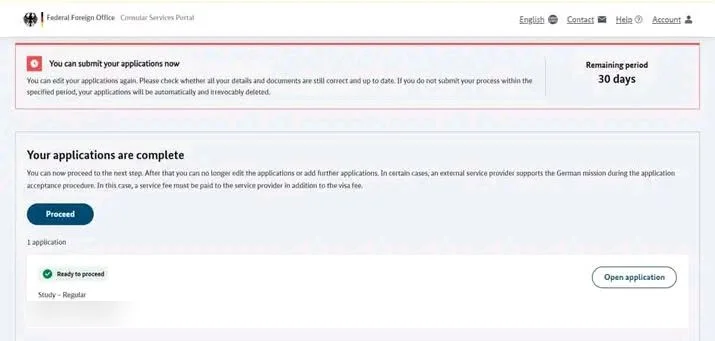
The CSP portal steps, in order: admission letter, online form, document upload, VFS check, then the in-person visit.
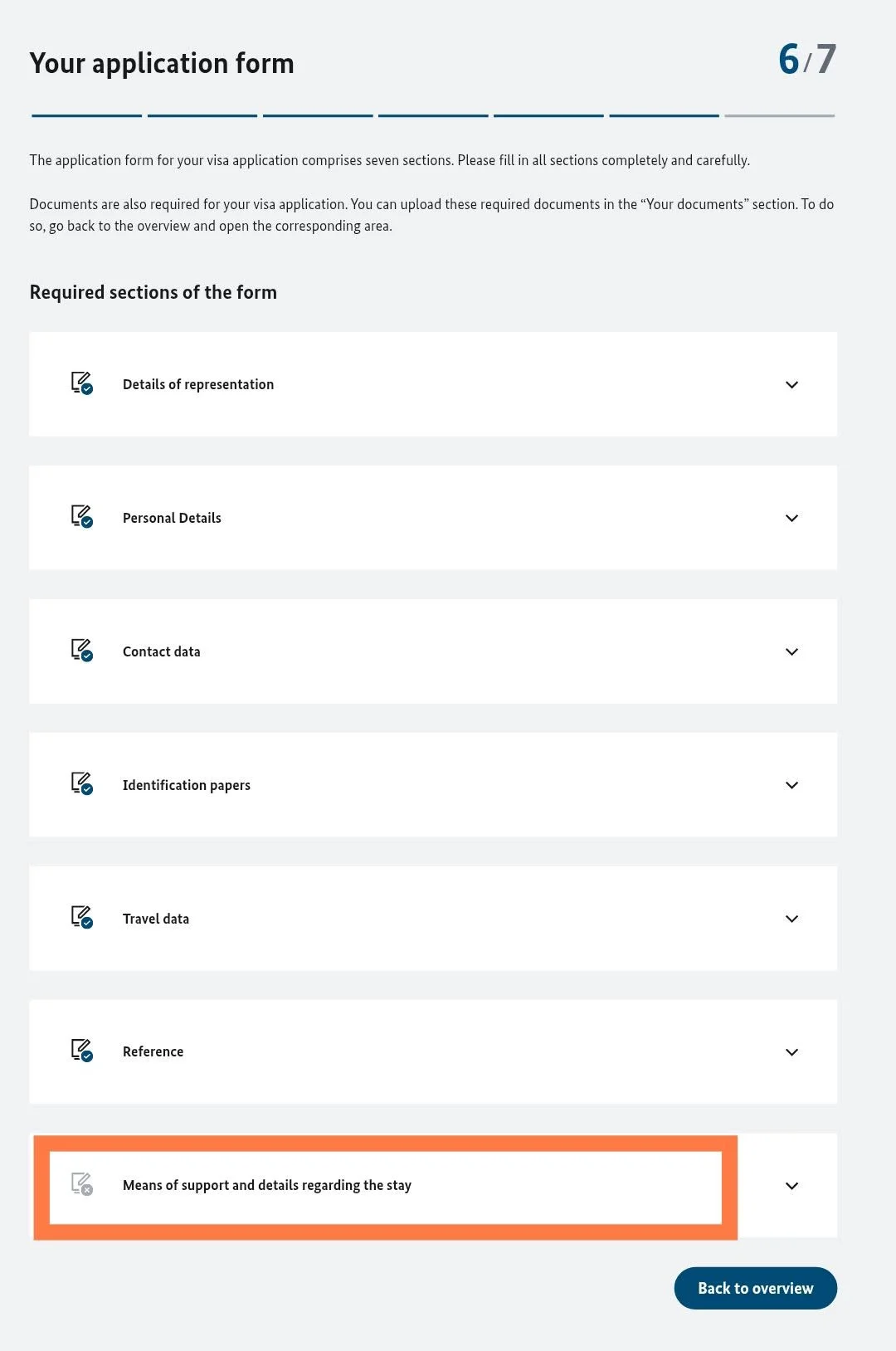
The visa application form sections in the CSP portal.
Which documents do you need?
You need a valid passport, issued in the last ten years, with at least two empty pages. You need one biometric photo, not older than six months. You need your admission letter, your blocked account confirmation (or scholarship or sponsorship letter), and your health and travel insurance. You need your school and university certificates with transcripts, your English test result such as IELTS, your CV and motivation letter, and your birth certificate. Students in the groups say the birth certificate is new in the CSP portal, but it is not on the official Dhaka checklist, so check the portal list on the day you apply. An admission offer letter is enough to apply. You do not need the enrolment certificate yet. Some group posts say the CV and motivation letter must now be in German. Treat that as a check, not a fact. Read the embassy checklist on the day you apply. Upload every passport page with a stamp, visa, or entry or exit mark.
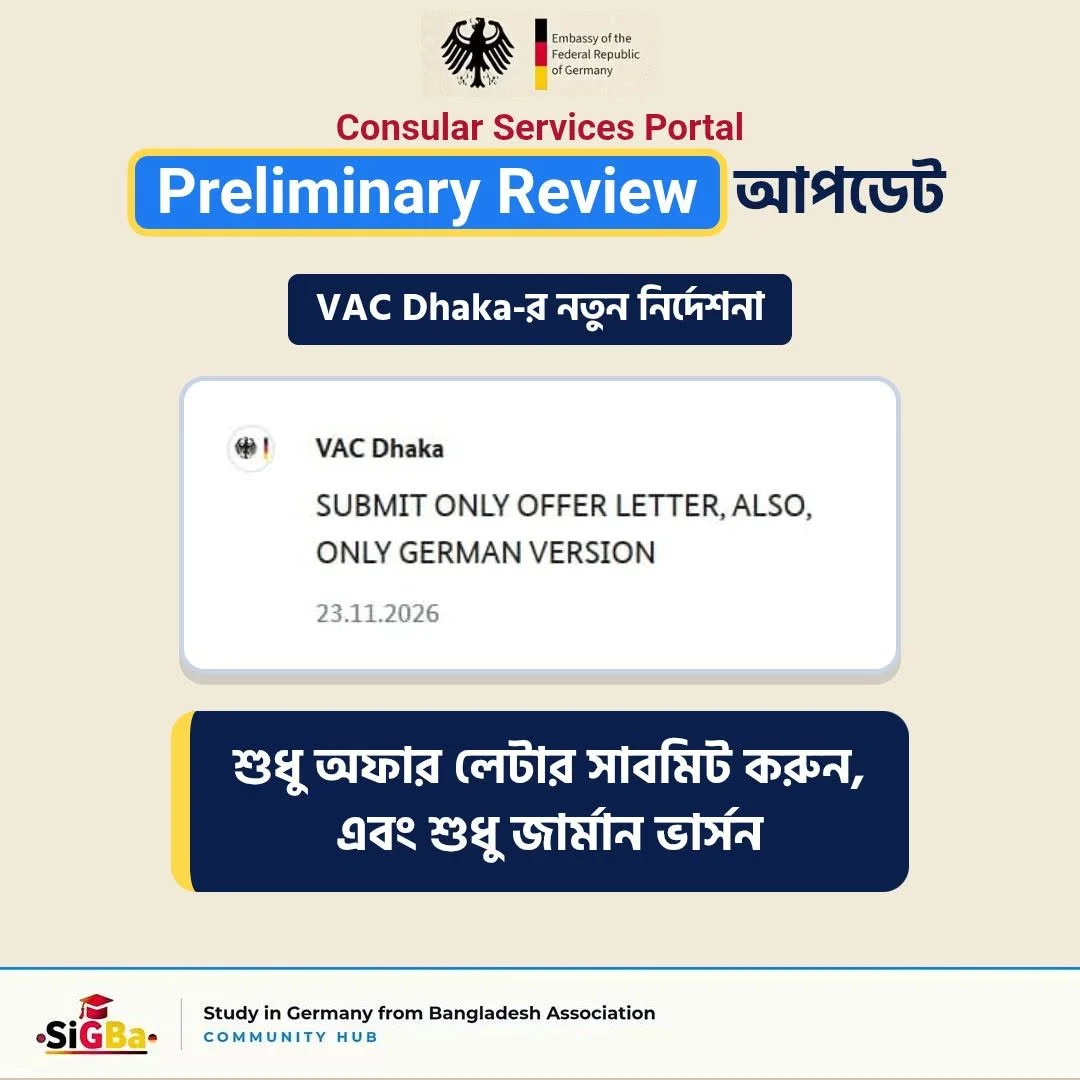
The German Embassy Dhaka student visa checklist. Check the live checklist on the day you apply. Rules can change.
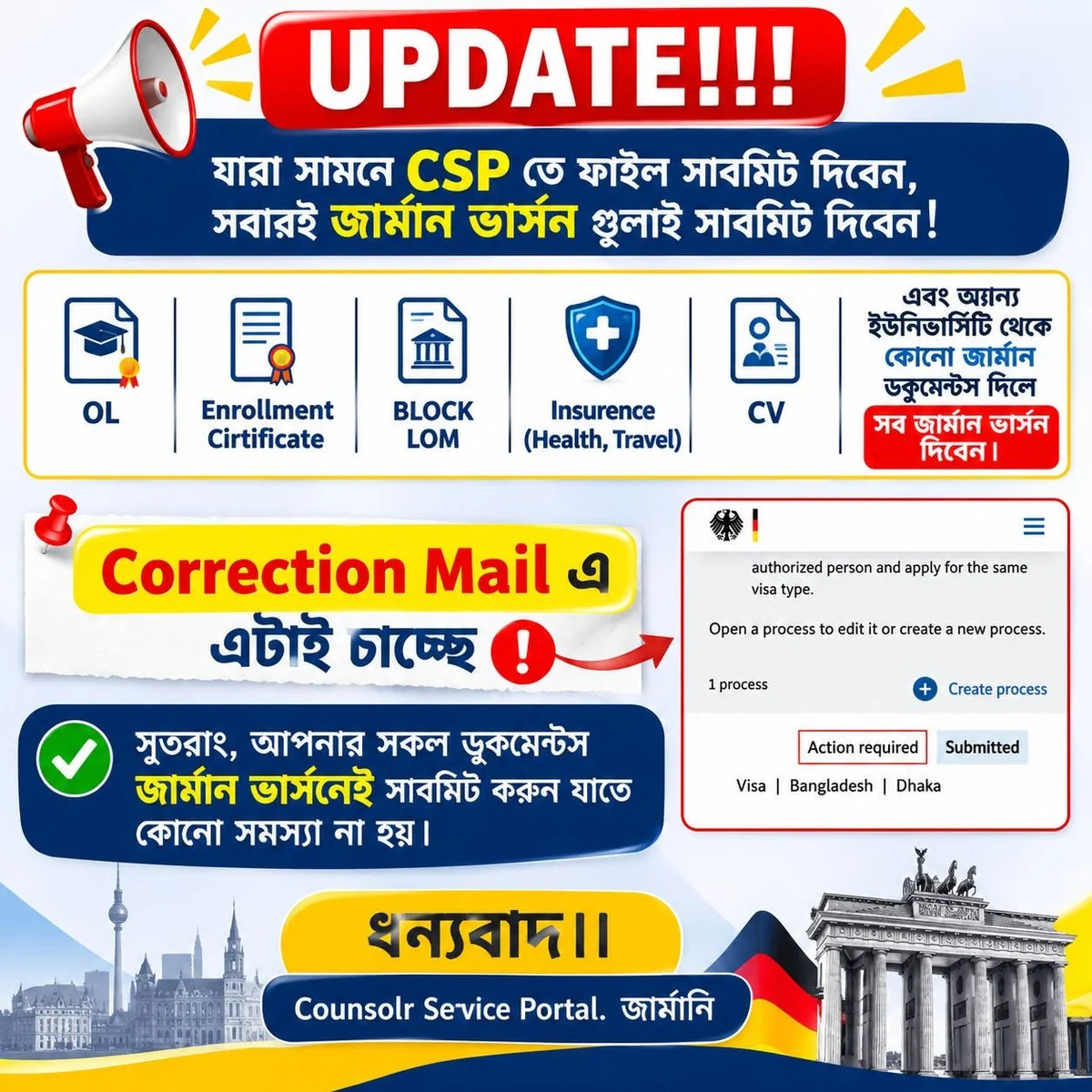
The CSP portal document step, shown in German.
Expatrio or Fintiba?
These are the two main online providers. The blocked amount is the same with both. The fees are not. Expatrio: €119 setup, €9 a month, total €12,131 for one year. If your visa is refused, Expatrio says it refunds the blocked amount and the service fees too. Fintiba: €159 setup, €9.90 a month, total €12,181.80 for one year. If your visa is refused, Fintiba refunds the blocked amount, except the opening fee and any transfer fees. Expatrio is about €50 cheaper over a year. Fintiba is known for fast confirmation if you pay by card. Both are accepted. The embassy does not recommend one over the other. The €100 buffer is gone for new accounts opened on or after 7 July 2026. Older guides that quote €12,153 include that buffer. Do not use them as your budget.
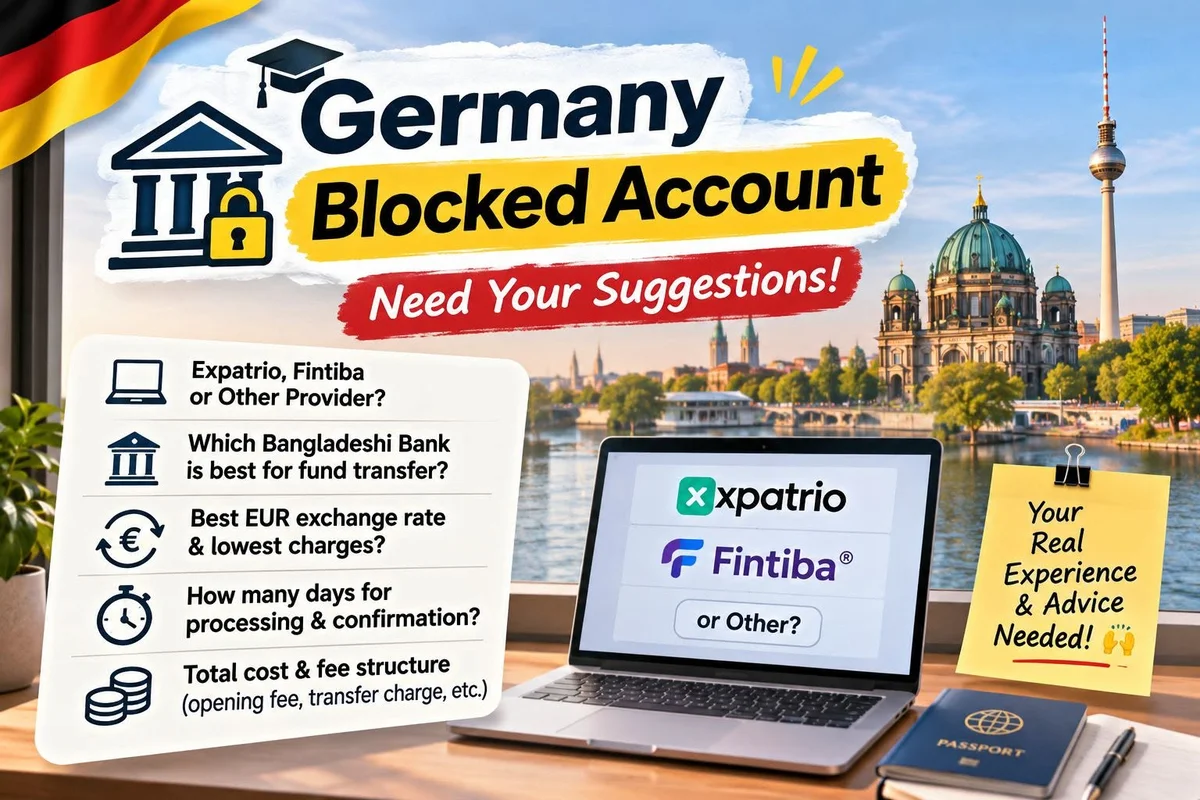
A blocked-account summary showing the €11,904 blocked amount, the monthly €992 payout, and the provider fees. Amounts differ by provider. See the figures above.
Can you change university after opening the account?
Yes. Many students open the account with one offer letter, then get a better offer later. The blocked account is in your name. It is not tied to one university in the way students fear. But you must update your details, and your visa file must match the admission letter you submit. Tell your provider about the change. Ask how to update the university details. Update your health insurance dates if your course dates change. Make sure the admission letter in your CSP file is the one you will actually use. Do not submit a visa file with one university's letter and plan to study at another. That mismatch is what causes trouble, not the change itself.
Can family pay for your blocked account?
Yes, in most cases. The money does not have to come from your own bank account in Bangladesh. Students ask about a sister or brother in Germany, an uncle abroad, or parents in Bangladesh. Providers usually accept funds from family members. But the embassy may ask where the money came from. This is called source of funds. Keep every proof: the transfer receipt, the sender's bank statement if you can, and a short note that says who sent the money and why. If your father works abroad, keep his job certificate, salary slips, and bank statement ready. Send money from Bangladesh through a bank, not through an informal channel. Keep the student file papers from the bank.
How do you send euros from Bangladesh?
There is no single best bank. Rates change every day. Fees change too. Compare on the day you send the money. Ask each bank for the euro rate that day, the SWIFT or transfer charge, any intermediary bank fee, and how long the transfer will take. A transfer often takes three to five working days. It can take up to 14 days. Do not leave it to the last week before your visa date. Keep the receipt. You may need it to show the source of funds, or if the provider says the amount arrived short.
What if you need a loan?
Many students need a loan for part of the blocked amount. In the groups, students ask about loans of 8 to 10 lakh taka. No bank is named here on purpose. Loan terms change, and they depend on your case. A bank may ask for a guarantor, land papers, a salary record, or a fixed deposit. Interest rates and monthly payments also vary. Go to two or three banks in person. Ask for the terms in writing. Ask for the total cost, not just the monthly payment. Ask how long the loan will take to approve. Then compare. Do not take a loan from an informal lender for a visa file. The embassy needs clear, traceable proof.
What if your visa is refused, or you never get a doc mail?
The blocked amount itself is protected. You get it back if the visa is refused. The fees depend on the provider. Expatrio says it refunds the service fees too. Fintiba refunds the blocked amount, except the opening fee and transfer fees. Ask your provider for the refund steps in writing before you pay. What if you open the account before you get a document submission mail, and then no mail comes? Ask your provider how to close the account and get a refund. Do not leave the money sitting there while you wait. Each provider has its own refund form and time. Start that process early.
Private university: does the source of funds matter more?
Yes, it can. If you go to a private university, you have two costs: the blocked account and the tuition fees. The embassy may ask how you paid the tuition, and where that money came from. A tuition payment receipt may not be enough on its own. Keep the receipt, and keep the bank statement that shows where the tuition money came from. If a parent paid it, keep their income proof too. If someone in Germany gives you a Verpflichtungserklärung, ask whether it also covers tuition. In most cases, it does not replace the tuition proof.
Health insurance at age 30 and over
Under 30, most students take public health insurance, such as TK. At 30 and over, public insurance is often not open to new students. They take private cover instead, such as ottonova. Check this with the provider before you choose a package. Do not assume that a value package that includes insurance will fit your age. Ask what the monthly cost will be, and whether you can switch to public insurance later.
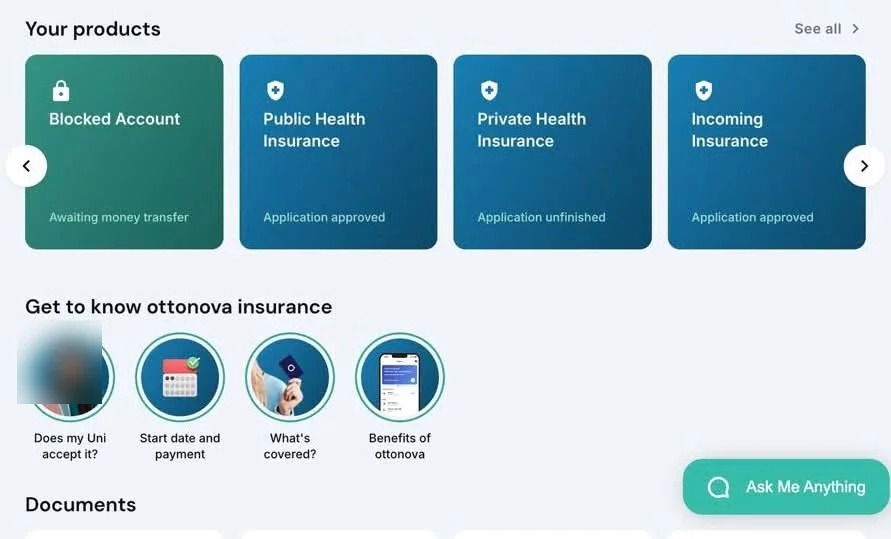
A blocked-account app view with the health insurance details.
The interview: what do they actually ask?
Most Master's students do not get a long interview. Some get a phone call. Some are called in person. Bachelor's students are more likely to face questions. The questions are simple: Why Germany, and not another country? Why this university and this course? Why did you change your subject, if you did? What will you do after your degree? How will you pay for your studies? Answer in your own words. Do not memorise a script from an agency. If you changed subject, say why. A student who moved from tourism to business can say that business covers more ground, and that their earlier studies gave them a base in it. Bring your original school leaving certificate if they ask for it. For a Bachelor's student, that is usually the HSC certificate.
What if your IELTS is 5.5?
An overall 5.5 is low for most public universities. Some private universities may accept it. Some courses may not. Do not apply to a public university that asks for 6.0 or 6.5 with a 5.5 and hope for the best. Check the course page first. If the course asks for 6.0, take a retake. A one-skill retake can help if only one part is low. The embassy does not set your IELTS score. The university does. But a weak score can still hurt your visa case if the officer doubts you can follow the course.
Checklist and mistakes
Before you apply, check: admission letter saved as a clear PDF; blocked account opened, money in, confirmation received; health and travel insurance ready, with the right start date; passport, photo, certificates, and transcripts ready; CV and motivation letter ready. Check the language rule on the embassy checklist. Birth certificate ready; CSP account created, form filled, documents uploaded; visa fee of €75 ready in taka, in cash; source-of-funds proof filed.
The mistakes that cost students most: using the old €934 rate; opening the account too late, as transfers can take two weeks; submitting a visa file with a different university than the one on the admission letter; losing the transfer receipt; trusting a guide from last year for fees or portal rules; paying an agency for basic facts. The embassy checklist, the provider pages, and the CSP portal are free. Read them first.
Check the official pages before you act: German Embassy Dhaka at dhaka.diplo.de, the Consular Services Portal at digital.diplo.de, and the Expatrio and Fintiba blocked account pages for current fees and refund rules.
Next steps: plan your first year with the First-Year Cost Planner at https://studyingermanyhub.com/funding#cost-planner, and check the Dhaka document list on the Visa Hub at https://studyingermanyhub.com/visa.